Jerzy Skolimowski in Perspective (Pitched towards The Herald)

Sat attentively in a lecture hall in Aberdeen, some years ago, awaiting a class titled along the lines of ‘Music and its Uses in Film,’ I first experienced Polish director Jerzy Skolimowski. On a low quality VHS recording, my impressionable ears heard the screaming psychedelic licks of German Krautrock band Can’s 14 minute long ensemble for Deep End – the director’s consuming psychosexual thriller from 1970. An unrequited cinephile affair thus began with a director who has been posted absent from film for the past seventeen years.

Now 73 years of age, Skolimowski is back in the public eye having returned from the hiatus with his Venice 2010 Special Jury Prize winner Essential Killing. Seventeen years is a long time by any standards, though for the man himself the time has been spent contentedly forging a successful career as an artist.

The reasons for such a departure – from picturehouse to paintbrush, are debatable: the rise of American Independents in the late 80’s, interest in European directors fading, both, or something more. The truth, or part of it, is that he has only ever made films that he wanted to make – and hasn’t wanted to make one for quite some time. By some divine grace, inclusion in this years Edinburgh International Film Festival ‘Perspectives’ strand, sees the once forgotten name of Jerzy Skolimowski shared again with screenings of The Adventures of Gerard, Deep End, and The Shout. The event opens the door once more into the life and work of one of the heralds of the Polish New Wave.

Jerzy Skolimowski was born in Lodz, Poland on 5th May 1938. As a small child he was pulled from the rubble of his families house in Warsaw after a bomb fell on it in 1939. His father, an engineer by trade, died in a concentration camp in 1942, having been involved in an anti-Nazi conspiracy. While Jerzy spent the last years of the war in an orphanage, his mother helped rebuild the education system in Poland through her influence as a teacher. She later worked as a cultural attaché in the Polish Embassy in Prague having impressed in her early career.

Skolimowski spent 2 years in Adelboden in Switzerland before joining his mother in Czechoslovakia in 1948. While at school there, he met future luminaries of Czech culture Václav Havel and Miloš Forman. In 1951 he returned to Warsaw to finish off a disjointed grammar school education that had seen him expelled on more than one occasion – that early sign of an artistic temperament already evident.

During his time at Warsaw University, Skolimowski picked up interests in poetry, jazz and boxing. After graduating in ethnology, literature and history in 1959 he met Andrzej Wajda and Jerzy Andrzejewski, who invited him to co-write Wajda’s Innocent Sorcerers. He went on to the Polish Film School in Lodz where he started out as a scriptwriter in his own right. His extra-curricular interests featured heavily in his series of early low-budget films where he often played the lead. Awareness of his talents grew and offers from overseas began to surface.

The Golden Bear winning Le Départ was his first real breakthrough, bringing recognition on an international scale. It was a French comedy, filmed in Belgium, featuring Jean-Pierre Léaud as a frenzied young Porsche enthusiast. Le Départ is not such a personal picture, though it maintains the surrealist edge that later became a feature in some of his work. When it was filmed, Skolimowski didn’t speak any French and used an interpreter to help with his direction. The film represents a sudden shift in artistic style that is indicative of the nature of his career: with it difficult to pin him down to any particular oeuvre per se.

His next notable venture, or bump in the road, was an adaptation made in Italy, The Adventures of Gerard. Despite its inclusion in Edinburgh’s festival programme, the almost Pythonesque costume-comedy is not Skolimowski at his finest. Though bestowed with a charm of its own, he later admitted that it was his ‘worst ever movie.’ A theme of successful original screenplays followed by lacklustre adaptations was to ape him through his career, as views on his output began to polarise slightly.

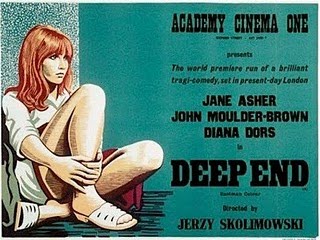
He followed with Deep End, the immensely enjoyable thriller starring a sultry Jane Asher. Set in London but filmed mostly in Germany, the Pole‘s status as a European director became well assured while his quality as an auteur became more apparent. It’s a wonderful film that boasts a Godardian flare for colour and a poetic use of metaphor. A wry Hitchcockian cameo on the London underground sees Skolimowski reading a communist paper. Having been exiled from Poland after the government had banned his film Rece do gory for its anti-Stalinist imagery, the scene was a friendly nod to his fans back in Poland. Deep End has been hard to see for years and the opportunity to catch it in Edinburgh receives warm welcome, while a DVD/Blu ray re-release is set for late July courtesy of the BFI.

True to form his next film, King, Queen, Knave, was another poor attempt to develop from source. It was followed by Skolimowski’s one successful adaptation, The Shout. The disquieting fantasy drama based on a Robert Graves short story indulges in the tall tales of a mentally unstable Englishman (Alan Bates), who believes he possesses an aboriginal ‘shout,’ with fatal power. There is a subtext of sound design laced through the film while hearing Bates’ deathly roar in a surround sound cinema setting is an experience, in itself, worthy of a visit to Edinburgh’s film festival.

Skolimowski’s greatest success was with his 1982 film Moonlighting, which focused on a group of Polish contractors working in London. Set during the Solidarity protests in Poland, the film was lauded for its timeliness. It won the award at Cannes for Best Screenplay while Jeremy Irons turned in a memorable performance as the only English speaking immigrant of his group. If there were to be a surprise exclusion from any Skolimowski perspective, Moonlighting would be it.

As soon as his directorial career peaked, it troughed and then disappeared into faint memory. During production of Success Is the Best Revenge, the German co-producer of the film went bankrupt. Skolimowski had to sign the film over to a British bank, and in order to counter the losses that had been made they decided that it wouldn’t be financially viable to release it. Having also staked his mortgage on Success (and I refuse to apologise for the pun), Skolimowski lost his home.

Toiling once more, the decision to work on another adaptation was not one of his shrewdest. Enticed by the big budget and seven-figure payday but not overly enamoured with the awful script, Skolimowski signed away his integrity. He was to adapt a story set in Vienna with sexual murders in railway stations. He eventually found himself unable to go through with it though, walking away from the job and the money in L.A.

His agent proposed another adaptation, of Polish writer Witold Gombrowicz’ Feydydurke (Third Door Key). Rather foolishly shot in English due to the very Polish content of the source, Skolimowski described the film as ‘euro-pudding.’ The failure was the final straw that broke the camels back. A semi self-imposed exile from filmmaking saw him spend the next seventeen years pursuing his long-time passion of painting, which led to some success with critical recognition, worldwide exhibitions and serious sales. He kept his toe dipped in the film world with various acting roles, including a notable outing as the father of Naomi Watts’ character in David Cronenberg’s Eastern Promises and another, amusingly, in Mars Attacks!

Opportunity knocked once more when a conversation with Isabella Huppert at a party led to an adaptation of Susan Sontag’s In America on the proviso that he prove himself as a director, once more, with a smaller film. Cztery noce z Anna (Four Nights with Anna) was warmly received internationally in 2008 but is yet to be released in the UK. After the success of Essential Killing and the resultant Skolimowski nostalgia currently in full flux, the Pole has no plans for another feature as yet. Given the nature of his career and his preference for making personal films, it stands to reason that if he doesn’t have a story worth telling he will remain silent.

The reasons as to why Skolimowski has been, until now, forgotten aren’t to be found in his moments of silence. In his time he was part of a ‘wave’ of great Polish directors, therein lies the problem. Viewing preferences changed and his memory was washed out to ocean while the best of Polanski, Wajda, Kieslowski and so on, remained at shore. Fickle tastes turned as the American Independents rose and a new generation of cineastes cut their teeth on new flavours. Film culture has moved on but with the three screenings in Edinburgh comes the chance to experience Skolimowski and form an opinion that might help put modern cinema in perspective.

The veteran director though, will go back to painting – perhaps for another 17 years – but what better way to end a lifetime spent in the arts than with one final film, on his 100th birthday.

The Adventures Of Gerard, Filmhouse, June 25, 3.30pm; The Shout, Filmhouse, June 26, 1pm; Deep End, Filmhouse, June 26, 2.45pm

The Dawn of Israeli Horror (Pitched towards The Dark Side Magazine)

Adrian Turner talks to newcomer directors Aharon Keshales and Navot Papushado about their breakthrough film Rabies, ‘the world’s first Israeli horror.’

Though Israeli arthouse cinema has been going through a renaissance of late, more mainstream genres within their film industry have, for decades, been lacking in innovation. The variety of options has been slim. Countless comedies and melodramas are rolled out, often with the same script used twice in the one year where only the actors are interchangeable. Challenging the audience factors low on the agenda. Enter Rabies and suddenly everyone is frothing at the mouth – whoever heard of an Israeli horror film?

The landmark debut is guaranteed to please genre fans with its relentless and uproarious upheaval of well-known conventions. Rabies casts a critical eye on violence for the sake of violence and draws a clear line between itself and, for example, the latter stages of the Saw franchise. After a hugely successful release in Israel, having taken an alternative route to international distribution, Rabies is picking up momentum on the festival circuit. Distribution rights have been snapped up within the U.S and Canada following the accolade of the critic’s award at the Fantasporta Film Festival in Portugal and inclusion in the official selection at the Tribeca Film Festival.

I caught up with directors Aharon Keshales and Navot Papushado during their stop at the 2011 Edinburgh International Film Festival to discuss the road to success, Atlantic City, Wes Craven and blowing girls up with landmines.

MASTER & APPRENTICE

Aharon cuts an authoritative yet relaxed figure, fitting of any film lecturer from Tel-Aviv University. Navot is a different kettle of fish, lively and talkative, undoubtedly the junior of the pair he is a graduate from Aharon’s class. Teacher and student, master and apprentice, they are horror genre Jedi dabbling in ‘The Dark Side.’

Aharon regales me with the story of his first encounter with Navot, “He was a student in my second year as a Professor and he was a cheeky bastard! In his first lesson he sat with his sunglasses on in my class. I didn’t say anything, but he was so cheeky he didn’t just sit there with them on, he raised his hand and said ‘can I ask you a question?’ and said ‘can I keep my glasses on for the entire class?’” Thus began their partnership – although Navot is adamant that he picked his teacher up in a bar. “Aharon was my most supportive teacher; he was always encouraging me to think outside the box.”

It’s an evident chemistry that translates to their success on screen. They are clear horror junkies and proceed to reference every classic slasher from every corner of the globe as influence for their film: Nightmare on Elm Street, Friday 13th, Scream, The Hills Have Eyes, Oldboy, Sympathy for Mr. Vengeance, Memories of Murder, Severance, Hostel, Saw. There is that air of Quentin Tarantino film-fandom about them. They reference him too. Navot tells me, “When we started, it was out of pure love for the genre” – a good place to start by any means.

The idea for the script arrived during a trip to Atlantic City while the pair were out in the U.S for the premiere of Navot’s graduation film short which was produced by his teacher. “We paid $30 for the bus ride to Atlantic City and when we got there they gave us $20 back to gamble… So we lost the $20, ate burgers at the Hard Rock Café and went to a Tool concert. We smoked cigars on the beach and that’s where we decided to do the first Israeli horror.” I’m assured Navot kept his sunglasses on the whole time.

NEW DECADE, NEW RULES

With the killer in Rabies rendered unconscious and impotent for the duration, his victims become inadvertently responsible for the death toll. It’s a unique twist that gives the film a wry sense of social conscience and self awareness that has been lacking in the genre since films like The House on the Edge of the Park – essentially it’s a dark and twisted allegory about the state of Israel and the harshness of living there amidst endemic corruption and the ongoing conflict. Although rooted in a mainstream market, Aharon and Navot are not afraid to flex their film school muscle.

While crafting its own rules, Rabies does so with a savvy introspection that goes beyond traditional genre confines – most evident in its treatment of death. Each character or victim is given a back-story and a reason to live, Aharon explains, “The real violent thing in Rabies is when you see the outcomes, when you see the minutes after the death. We tried to stretch out the moments after someone dies to achieve an emotional reaction.”

The natural comparison (not entirely due to proximity of release) is Scream 4 – with the two films each extending themselves to do something new for the genre. Navot confesses, “We have a bit of an open rivalry with Wes Craven.” Aharon explains, “No, no, I love him, I love him but I think when you go into Meta you lose it, you lose the audience. You lose the most important thing in film. I can’t relate to a film that is too sinister. With the first 20 minutes of Scream 4 with the film within a film within a film motif, you don’t know when it’s going to stop and I can’t relate to characters when I don’t know what universe they are living on. We wanted to distinguish ourselves from other horror films; with Rabies violence is not just for the act of violence itself. We decided to do a film where nobody could guess the outcome. To do that you can do two things – you could go the snuffy way to contrive various special, elaborate ‘torture-porn’ scenarios with stuff you have never seen before or you can create a misdirection plot; you use conventions and you break the convention. In that way you can tell a different story about slasher films.”

While both films choose a ‘misdirection plot’ they approach it in entirely different ways. Whether you favour Craven or Keshales & Papushado, there are plenty of options left to explore in a new decade of horror. Aharon and Navot might score over Craven because they have crafted a formula, with its own set of rules, which can be easily repeated. They can only hope that it won’t become tiresome any time soon.

THE ISRAELI AUDIENCE

Horror films have never been big hitters in Israel. The audience lives largely on a diet of its nation’s own produce, so big horror films from the U.S, Spain or Korea either don’t screen at all or achieve fairly low figures in the box office. Israel is a nation where, in the 60’s, The Beatles were banned for fear that they might corrupt young minds. Even Cliff Richard represented a societal horror with one of his gigs, in 1963, perceived to have created ‘mass hysteria.’ Modern Israel is a different place; with global communication at an all time high, young Israeli morals are up for grabs. With the buzz and excitement about Rabies having kicked off long before its release Aharon and Navot had little doubt that they had a responsibility to their homeland to drag their nation’s film produce up to par with worldwide pop culture.

Indeed, the current has been turning in Israeli cinema for some time; ‘boureka’ films (comedies and melodramas) gained some international recognition in the 70’s but their influence was killed off by the rise of home video. Since then the pace has been slowly gathering with overseas influence seeping into the culture and room for genre experimentation growing. Finally, the conditions were right for a horror revolution.

They took an alternative route to distribution, as Navot explains, “We decided to go out to the Israeli audience that’s been waiting for 60 years to get the first Israeli horror film before going out on the festival circuit. When the time came to release the film, it was a huge event in Israel with all the newspapers – Aharon even got interviewed for the 8 o’clock news. It was such an event and such a focus on horror films in Israel all of a sudden. It really started a small revolution.”

To be a fly on the wall for the first screenings in Israel would have been a fine thing; an audience completely untested, and who were there first and foremost to see their idols in their latest film – many completely unaware of what to expect. “We were sitting in the audience at the point where Ania Bukstein’s character is blown up by the landmine – that is their hero being killed. They were like ‘are we supposed to laugh because it’s funny but I’m not sure we are allowed to laugh?’ We were sitting in our screenings and we laugh our asses off because it’s funny, a girl is being exploded! There is nothing funnier than when a girl dies (in a movie).”

Rabies has been a local success thanks to the excitement and anticipation that surrounded its release, even landing a spell in the top 5 DVD rentals chart. How do you say long live the revolution in Hebrew?

FROM INCEPTION TO CREATION

It has been a long road to success. From the outset it was always going to be a tall order to bring horror into production in Israel – more than just a good script and cinephile passion. Aharon and Navot were able to pull off the impossible and attract a host of top Israeli A-list talent. Aharon explains, “First we approached the big chubby cop in the car (Lior Ashkenazi) who’s like the Israeli Tom Cruise, after he said yes we approached the ranger (Menashe Noy) who’s a huge comedian and really famous actor in Israel. After we had those two names the rest were phoning us! It was like a snowball effect. I’m in, I’m in, I’m in.” As soon as the script and cast were in place there was a media-frenzy with major outlets in Israel looking for the scoop. Once the story had broken a weight of expectation and pressure was suddenly placed on the pair of rank outsiders to produce the goods. Navot beams, “It became such a high profile film. It was almost 2 years before we had released it and everybody was already talking about Rabies” With the wheels set firmly in motion, momentum had gathered to such a pace that Aharon and Navot’s debut horror film was tearing up the track and cutting a path for the genre in Israel.

The response Aharon and Navot received from their cast was unheard of as they stuck their teeth into the challenge. Navot explains, “We told them, it’s gonna be hard, we’re gonna shoot it in the winter, we’re gonna physically abuse you, we are gonna put blood on you and we are gonna hit you… and they just loved it!” Actors were literally frothing at the mouth to be involved with Rabies. They were all bored with their regular roles and wanted a new challenge, as Navot tells me, “It was their first opportunity to be involved in a horror and find something fresh for themselves…fortunately for us.”

Their good fortune continued into the shoot, which was crammed into 19 days thanks to the low budget. They made use of available light the whole way through and achieved some seriously slick editing as they juggled multiple narratives.

Rabies has been an impressive debut for the Israeli directors. Their film is one of the most fresh and exciting things to happen to the genre for quite some time and they can only hope that it will only lead to greater things for horror film. For now though, the pair will attempt to repeat the formula for themselves. “We are in the middle of writing a script that will play with the conventions of kidnap thrillers and revenge thrillers. We are gonna take it and rape the shit out of it!”

With the excitement of ‘the world’s first ever Israeli horror’ having all but dissipated in their homeland, Aharon and Navot will be relying on their undoubted talents to extend their success. Finding actors will not be a problem and they will no doubt benefit from a healthier budget.

Navot sums up their experience, “We started a buzz, first we started because we wanted to do our own thing – now we have been labelled as pioneers we feel like we have a responsibility. We enjoy it; it’s a burden worth carrying.” Thanks to Rabies, Aharon and Navot may have unleashed a horror epidemic of their own design. Here’s hoping the fever catches on.

Rabies will screen at the FILM4’s FrightFest on the 26th and 28th of August, catch it before it catches you.

Jack Goes Boating Review (Pitched towards Little White Lies Magazine)


Stage to screen can often be the sketchiest of adaptations, with the translation of a visual and theatrical source seeming such a natural shift – but for every Streetcar Named Desire there’s A Chorus Line, where plonking a camera in Row F Seat 16 of a Saturday matinee performance simply won’t suffice.

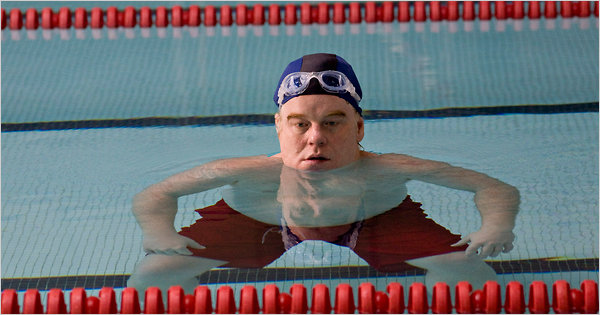
Philip Seymour Hoffman makes his directorial debut and contribution to American quiet tragedy with Jack Goes Boating, an offbeat indie romance set in New York.

The quirky story is borne of Robert Glaudini’s successful 2007 off-Broadway play, featuring the same actors and title. Sadly the stage shows, with straight-from-script psychologically overwrought characters and a workaday approach to interior and exterior scenes.

Reprising his role as Jack, Hoffman plays a warm-natured but socially crippled limo driver looking for love. Friend, colleague and wingman Clyde (John Ortiz) helps in his pursuit of Connie (Amy Ryan); the ill at ease object of his awkward affections. By their own sheepish standards they hit it off during a blind date. Jack finds himself less than casually arranging a second rendezvous – boating in the summer when it isn’t so cold.

As Jack and Connie’s relationship blossoms, Hoffman intersects the stagey vibe with what can only be described as music video moments. Collaboration with alternative rock band Grizzly Bear has afforded the soundtrack a Midas touch. Appropriately plaintive tracks from Fleet Foxes and Goldfrapp shift the focus from Jack’s baby-stepped development to Clyde’s leaping marital failure. Their visual deployment is less gratifying as they sit ham-handedly astride the ‘exit stage left’ aroma to the rest of the film.

Performance is the one true success of Hoffman’s labour. As Jack, his display is quietly consuming. Though he can’t swim, can’t cook and barely communicates, there is an underlying intelligence to the character. He negotiates each obstacle with OCD method and punishes his own minor shortcomings with a quiet frustration.

Amy Ryan rests well beside her director and co-star. She adorns Connie with a believable restraint that signposts the characters obviously troubled past. Her unease with the predatory X chromosome isn’t aided by her shady ‘David Cop-a-feel’ boss, and in Jack she finds warm solace.

The true quiet tragedy is that Hoffman has made such a limp choice for his directorial debut. He hasn’t dared to envisage anything stylistically unique for himself beyond a fleeting impressionistic moment where Jack plunges underwater to visualize himself swimming. Glaudini’s script must have seemed like plum pickings with the surfeit of psyche-real campaigners hanging ripe for the cast to immerse in. It’s the actor’s choice. He crafts a charming, but routine character study that is over reliant on his own well-rehearsed performance. Too often the stage is set, with a camera in tow, for the characters to simply read their lines and do the scene. It’s canned theatre and no more.

With it all ending oddly on Clyde’s bum note we are left with a confused catharsis as the adaptation falters to a halt. We never really cared about Clyde and as endearing as Jack’s idealistic romantic pathos is by comparison, the representation falls through the cracks and the boat shows signs of sinking.


Anticipation: Can Hoffman direct as well as he acts? 3
Enjoyment: Hoffman can’t direct but he sure can act. 2
In Retrospect: Who cares if Hoffman can’t direct. He can act. 3

Troll Hunter Review (Pitched towards Total Film Magazine)


You have your mountain trolls and you have your forest trolls. The subgroups are ‘Raflegant’, ‘Tusseladd’, ‘Rimtusse’, ‘Dovregubben’ and ‘Harding.’ These pesky giant critters are the subject of André Øvredal’s Troll Hunter (Trolljegeren), a found-footage thriller given a cool Nordic touch.

Through ‘Michael Moore’ perseverance, journalism students Thomas (Glenn Erland Tosterud) and Johanna (Johanna Mørck) uncover the most shocking story to ever hit the fjords. While investigating a spate of bear killings they discover the ‘Trolljegeren’ (Otto Jespersen), a government-hired ex-marine whose sole mission it is to cull and contain the ‘stuff of fairytale’ tree-sized trolls and keep their existence a secret.

Weary of his unsung hero status the hunter agrees to let his new teammates film in the hope that the exposure will revolutionise the game. As we venture into his magical world, the troll encounters are delivered with a gathering pace – each time more flabbergasting than the next, our hero rains down death on any of the once mythical beasties who dare to stray beyond government imposed boundaries. It’s not quite all so gung-ho – although quintessentially a mercenary, the hunter could not seem any more an unlikely hero than he does – bearing more resemblance to Ray Mears than Rambo.

To fathom this odd treat consider the duck and dive action of Jurassic Park and the nosy visceral camera-play of The Blair Witch Project. Add a slice of Best In Show humour and you will have a fairly sure concept of what to expect. Seeing spectacular CGI on a shoestring budget fused with such a timely and wry comic glance is such a rarity that it’s a joy to witness. Some cack-handed plot inclusions, such as a conveniently inept power-line technician who struggles to explain a circular supply, are minor gripes that detract little from an otherwise precise humour. It’s blockbuster science fiction – Norwegian style.


Verdict: The happy marital bond of Øvredal’s Norsk humour and shaky-cam antics with old-fashioned Hollywood action thrills ensure this journey into the land of the troll is far from… droll.

Treasure from the Deep End – DVD Review (Pitched towards Sight & Sound Magazine)


A Jerzy Skolimowski psychosexual thriller – for which a sultry Jane Asher received a best supporting actress Bafta nomination in 1970 – does not sound like the typical kind of treasure to have been, until now, lost at sea. Deep End becomes the earliest film from Skolimowski’s directorial oeuvre to be made widely available. A BFI dual-format Blu-ray/DVD release brings back a restored version of the tragi-comedy tale of two young bathhouse attendants from London.

Skolimowski takes a swim in the deep end of kidulthood with Mike (John Moulder-Brown), a callow school-leaver who petulantly pines after his snarky redhead colleague Susan (Jane Asher) – a young but experienced beauty, bestowed with a curt grace that dwells somewhere beneath the devious surface of her dark eye-shadow and pouty red lipstick.

The Polish director utilizes the bathhouse as a microcosm of Mike and Susan’s sexual world. Mike’s virginal psychology is informed by the seamy antics that go on at his workplace. He suffers from the bureaucratic pains of sexual segregation while risqué poolside flirtations and horny housewives stalk his daily labour. A riotously lecherous cameo from Diana Dors helps stoke the visual image of Mike’s jejune sexual psyche.

Mike’s pubescent frustrations spill over into an infantile infatuation with Susan. She toys with him while they work. Their chemistry is written all over Moulder-Brown’s blushing face as Asher, who was dating Paul McCartney around the time, forms an ideal object of desire – turning foxily from beddable to rancorous with one foul swish of her fiery red hair.

When the working day is over their games spiral into corrupted obsession amid the city streets, brothels and underground stations as the pup follows his catty femme fatale into the seedy depths of Soho. Truly mesmeric scenes are licked with the pulsating sounds of German ‘Krautrock’ band Can, whose 14-minute long trance-inducing track Mother Sky dizzies seductively. The unique sound design helps paint Skolimowski’s foreign perspective of the more unsavoury corners of ‘swinging London.’ Each segment of the composition drags Mike through the ringers of his fevered hound-dog state, which howls from deep within the street facades of London’s darkest district.

It’s never really made clear between what is fantasy and reality, as the Pole explores Mike’s obsession through the intricate surrealist metaphors – of such deliriously enjoyable fusion – that he creates. During the Soho haze, Mike attaches himself to a cardboard cut-out of one of the strip club’s performers that bears an uncanny likeness to Susan. He confronts her, ‘Is this you? Is it!’ The question is never answered because it doesn’t matter how it’s read. Either it is, and Susan is confirmed as the unattainable lady of the night, far too experienced for the likes of the lovelorn lad – or it is all in his imagination; a manifestation of his dough-eyed lunacy.

Much of the films craft is embodied in the foreign object, both as a psychoanalytical emblem and as a vessel of tragically uproarious comedy. As he wrestles to control his rapid adolescent growth-spurt, Mike’s reverie reaches a point of sordid climax. Completely tormented by Susan and her power over his impotent grasp of burgeoning testosterone – the best he can do is to swim naked in the pool with his cut-out cutie.

Skolimowski drops clues, throughout, to the films finale with perfect and subtle precision. A sense of looming danger is aroused by the flashes of red from the warning signs on the bathhouse and city street walls and on the cars, bikes and fire extinguishers that litter the scene. During the enlightening ‘Making of’ documentary included in the release, Jane Asher and John Moulder-Brown share how they thought of the colourful additions to the set as nothing more than odd – until they saw the finished piece. To say Skolimowski waits until the end to reveal his films true colours would be an understatement.

Such painterly contributions have been more his style of recent times having waited 17 years to direct his latest film, Essential Killing, while busied with his work as a successful artist in his own right – generally preferring a paintbrush to a picturehouse. His secondment from film direction has created a blind spot in the history of the Polish New Wave; Skolimowski was one of its leading heralds. The re-release helps ensure that an important director, from within a popular discourse of cinema culture, is not lost in time.

The Pole’s film was originally released in one of the great eras of uncertainty – there can be less doubt that Deep End signifies some of his finest work. The cinema produced is one of a perfectly versioned sense of climax to London’s sexual revolution that must surely be free from any and all critical opprobrium. It’s not a film of bold social significance. It might even be dubbed a largely insular story of desire. Deep End is a daringly adolescent film directed by a, then, young director, who was able to conceive an unflinchingly dark grasp of pup yearning and uncultured raw testosterone – the likes of which are rarely seen in contemporary cinema.