Stage to screen can often be the sketchiest of adaptations, with the translation of a visual and theatrical source seeming such a natural shift – but for every Streetcar Named Desire there’s A Chorus Line, where plonking a camera in Row F Seat 16 of a Saturday matinee performance simply won’t suffice.
Philip Seymour Hoffman makes his directorial debut and contribution to American quiet tragedy with Jack Goes Boating, an offbeat indie romance set in New York.
The quirky story is borne of Robert Glaudini’s successful 2007 off-Broadway play, featuring the same actors and title. Sadly the stage shows, with straight-from-script psychologically overwrought characters and a workaday approach to interior and exterior scenes.
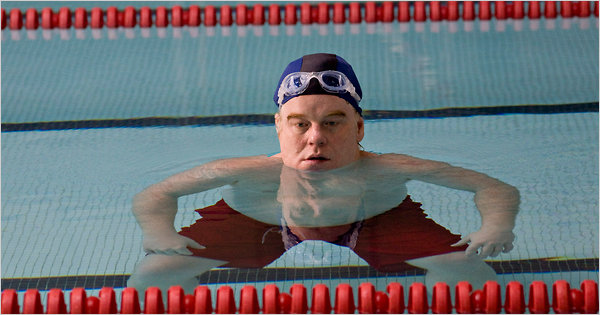
Reprising his role as Jack, Hoffman plays a warm-natured but socially crippled limo driver looking for love. Friend, colleague and wingman Clyde (John Ortiz) helps in his pursuit of Connie (Amy Ryan); the ill at ease object of his awkward affections. By their own sheepish standards they hit it off during a blind date. Jack finds himself less than casually arranging a second rendezvous – boating in the summer when it isn’t so cold.
As Jack and Connie’s relationship blossoms, Hoffman intersects the stagey vibe with what can only be described as music video moments. Collaboration with alternative rock band Grizzly Bear has afforded the soundtrack a Midas touch. Appropriately plaintive tracks from Fleet Foxes and Goldfrapp shift the focus from Jack’s baby-stepped development to Clyde’s leaping marital failure. Their visual deployment is less gratifying as they sit ham-handedly astride the ‘exit stage left’ aroma to the rest of the film.
Performance is the one true success of Hoffman’s labour. As Jack, his display is quietly consuming. Though he can’t swim, can’t cook and barely communicates, there is an underlying intelligence to the character. He negotiates each obstacle with OCD method and punishes his own minor shortcomings with a quiet frustration.
Amy Ryan rests well beside her director and co-star. She adorns Connie with a believable restraint that signposts the characters obviously troubled past. Her unease with the predatory X chromosome isn’t aided by her shady ‘David Cop-a-feel’ boss, and in Jack she finds warm solace.
The true quiet tragedy is that Hoffman has made such a limp choice for his directorial debut. He hasn’t dared to envisage anything stylistically unique for himself beyond a fleeting impressionistic moment where Jack plunges underwater to visualize himself swimming. Glaudini’s script must have seemed like plum pickings with the surfeit of psyche-real campaigners hanging ripe for the cast to immerse in. It’s the actor’s choice. He crafts a charming, but routine character study that is over reliant on his own well-rehearsed performance. Too often the stage is set, with a camera in tow, for the characters to simply read their lines and do the scene. It’s canned theatre and no more.
With it all ending oddly on Clyde’s bum note we are left with a confused catharsis as the adaptation falters to a halt. We never really cared about Clyde and as endearing as Jack’s idealistic romantic pathos is by comparison, the representation falls through the cracks and the boat shows signs of sinking.
Anticipation: Can Hoffman direct as well as he acts? 3
Enjoyment: Hoffman can’t direct but he sure can act. 2
In Retrospect: Who cares if Hoffman can’t direct. He can act. 3


 adrianpaulturner.com
You must be logged in to post a comment.