Category Archives: University Submissions

Jack Goes Boating Review (Pitched towards Little White Lies Magazine)


Stage to screen can often be the sketchiest of adaptations, with the translation of a visual and theatrical source seeming such a natural shift – but for every Streetcar Named Desire there’s A Chorus Line, where plonking a camera in Row F Seat 16 of a Saturday matinee performance simply won’t suffice.

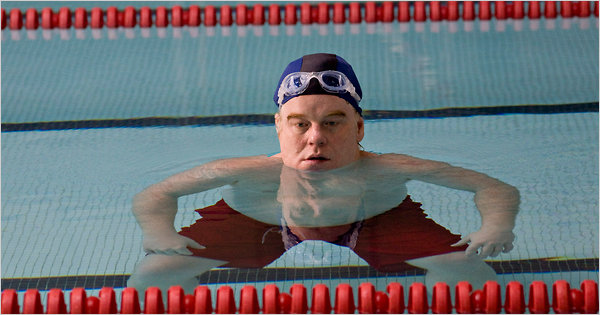
Philip Seymour Hoffman makes his directorial debut and contribution to American quiet tragedy with Jack Goes Boating, an offbeat indie romance set in New York.

The quirky story is borne of Robert Glaudini’s successful 2007 off-Broadway play, featuring the same actors and title. Sadly the stage shows, with straight-from-script psychologically overwrought characters and a workaday approach to interior and exterior scenes.

Reprising his role as Jack, Hoffman plays a warm-natured but socially crippled limo driver looking for love. Friend, colleague and wingman Clyde (John Ortiz) helps in his pursuit of Connie (Amy Ryan); the ill at ease object of his awkward affections. By their own sheepish standards they hit it off during a blind date. Jack finds himself less than casually arranging a second rendezvous – boating in the summer when it isn’t so cold.

As Jack and Connie’s relationship blossoms, Hoffman intersects the stagey vibe with what can only be described as music video moments. Collaboration with alternative rock band Grizzly Bear has afforded the soundtrack a Midas touch. Appropriately plaintive tracks from Fleet Foxes and Goldfrapp shift the focus from Jack’s baby-stepped development to Clyde’s leaping marital failure. Their visual deployment is less gratifying as they sit ham-handedly astride the ‘exit stage left’ aroma to the rest of the film.

Performance is the one true success of Hoffman’s labour. As Jack, his display is quietly consuming. Though he can’t swim, can’t cook and barely communicates, there is an underlying intelligence to the character. He negotiates each obstacle with OCD method and punishes his own minor shortcomings with a quiet frustration.

Amy Ryan rests well beside her director and co-star. She adorns Connie with a believable restraint that signposts the characters obviously troubled past. Her unease with the predatory X chromosome isn’t aided by her shady ‘David Cop-a-feel’ boss, and in Jack she finds warm solace.

The true quiet tragedy is that Hoffman has made such a limp choice for his directorial debut. He hasn’t dared to envisage anything stylistically unique for himself beyond a fleeting impressionistic moment where Jack plunges underwater to visualize himself swimming. Glaudini’s script must have seemed like plum pickings with the surfeit of psyche-real campaigners hanging ripe for the cast to immerse in. It’s the actor’s choice. He crafts a charming, but routine character study that is over reliant on his own well-rehearsed performance. Too often the stage is set, with a camera in tow, for the characters to simply read their lines and do the scene. It’s canned theatre and no more.

With it all ending oddly on Clyde’s bum note we are left with a confused catharsis as the adaptation falters to a halt. We never really cared about Clyde and as endearing as Jack’s idealistic romantic pathos is by comparison, the representation falls through the cracks and the boat shows signs of sinking.


Anticipation: Can Hoffman direct as well as he acts? 3
Enjoyment: Hoffman can’t direct but he sure can act. 2
In Retrospect: Who cares if Hoffman can’t direct. He can act. 3

Troll Hunter Review (Pitched towards Total Film Magazine)


You have your mountain trolls and you have your forest trolls. The subgroups are ‘Raflegant’, ‘Tusseladd’, ‘Rimtusse’, ‘Dovregubben’ and ‘Harding.’ These pesky giant critters are the subject of André Øvredal’s Troll Hunter (Trolljegeren), a found-footage thriller given a cool Nordic touch.

Through ‘Michael Moore’ perseverance, journalism students Thomas (Glenn Erland Tosterud) and Johanna (Johanna Mørck) uncover the most shocking story to ever hit the fjords. While investigating a spate of bear killings they discover the ‘Trolljegeren’ (Otto Jespersen), a government-hired ex-marine whose sole mission it is to cull and contain the ‘stuff of fairytale’ tree-sized trolls and keep their existence a secret.

Weary of his unsung hero status the hunter agrees to let his new teammates film in the hope that the exposure will revolutionise the game. As we venture into his magical world, the troll encounters are delivered with a gathering pace – each time more flabbergasting than the next, our hero rains down death on any of the once mythical beasties who dare to stray beyond government imposed boundaries. It’s not quite all so gung-ho – although quintessentially a mercenary, the hunter could not seem any more an unlikely hero than he does – bearing more resemblance to Ray Mears than Rambo.

To fathom this odd treat consider the duck and dive action of Jurassic Park and the nosy visceral camera-play of The Blair Witch Project. Add a slice of Best In Show humour and you will have a fairly sure concept of what to expect. Seeing spectacular CGI on a shoestring budget fused with such a timely and wry comic glance is such a rarity that it’s a joy to witness. Some cack-handed plot inclusions, such as a conveniently inept power-line technician who struggles to explain a circular supply, are minor gripes that detract little from an otherwise precise humour. It’s blockbuster science fiction – Norwegian style.


Verdict: The happy marital bond of Øvredal’s Norsk humour and shaky-cam antics with old-fashioned Hollywood action thrills ensure this journey into the land of the troll is far from… droll.

Treasure from the Deep End – DVD Review (Pitched towards Sight & Sound Magazine)


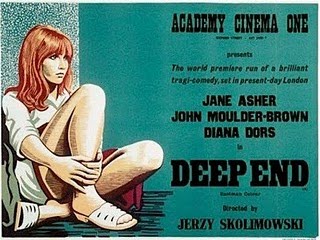
A Jerzy Skolimowski psychosexual thriller – for which a sultry Jane Asher received a best supporting actress Bafta nomination in 1970 – does not sound like the typical kind of treasure to have been, until now, lost at sea. Deep End becomes the earliest film from Skolimowski’s directorial oeuvre to be made widely available. A BFI dual-format Blu-ray/DVD release brings back a restored version of the tragi-comedy tale of two young bathhouse attendants from London.

Skolimowski takes a swim in the deep end of kidulthood with Mike (John Moulder-Brown), a callow school-leaver who petulantly pines after his snarky redhead colleague Susan (Jane Asher) – a young but experienced beauty, bestowed with a curt grace that dwells somewhere beneath the devious surface of her dark eye-shadow and pouty red lipstick.

The Polish director utilizes the bathhouse as a microcosm of Mike and Susan’s sexual world. Mike’s virginal psychology is informed by the seamy antics that go on at his workplace. He suffers from the bureaucratic pains of sexual segregation while risqué poolside flirtations and horny housewives stalk his daily labour. A riotously lecherous cameo from Diana Dors helps stoke the visual image of Mike’s jejune sexual psyche.

Mike’s pubescent frustrations spill over into an infantile infatuation with Susan. She toys with him while they work. Their chemistry is written all over Moulder-Brown’s blushing face as Asher, who was dating Paul McCartney around the time, forms an ideal object of desire – turning foxily from beddable to rancorous with one foul swish of her fiery red hair.

When the working day is over their games spiral into corrupted obsession amid the city streets, brothels and underground stations as the pup follows his catty femme fatale into the seedy depths of Soho. Truly mesmeric scenes are licked with the pulsating sounds of German ‘Krautrock’ band Can, whose 14-minute long trance-inducing track Mother Sky dizzies seductively. The unique sound design helps paint Skolimowski’s foreign perspective of the more unsavoury corners of ‘swinging London.’ Each segment of the composition drags Mike through the ringers of his fevered hound-dog state, which howls from deep within the street facades of London’s darkest district.

It’s never really made clear between what is fantasy and reality, as the Pole explores Mike’s obsession through the intricate surrealist metaphors – of such deliriously enjoyable fusion – that he creates. During the Soho haze, Mike attaches himself to a cardboard cut-out of one of the strip club’s performers that bears an uncanny likeness to Susan. He confronts her, ‘Is this you? Is it!’ The question is never answered because it doesn’t matter how it’s read. Either it is, and Susan is confirmed as the unattainable lady of the night, far too experienced for the likes of the lovelorn lad – or it is all in his imagination; a manifestation of his dough-eyed lunacy.

Much of the films craft is embodied in the foreign object, both as a psychoanalytical emblem and as a vessel of tragically uproarious comedy. As he wrestles to control his rapid adolescent growth-spurt, Mike’s reverie reaches a point of sordid climax. Completely tormented by Susan and her power over his impotent grasp of burgeoning testosterone – the best he can do is to swim naked in the pool with his cut-out cutie.

Skolimowski drops clues, throughout, to the films finale with perfect and subtle precision. A sense of looming danger is aroused by the flashes of red from the warning signs on the bathhouse and city street walls and on the cars, bikes and fire extinguishers that litter the scene. During the enlightening ‘Making of’ documentary included in the release, Jane Asher and John Moulder-Brown share how they thought of the colourful additions to the set as nothing more than odd – until they saw the finished piece. To say Skolimowski waits until the end to reveal his films true colours would be an understatement.

Such painterly contributions have been more his style of recent times having waited 17 years to direct his latest film, Essential Killing, while busied with his work as a successful artist in his own right – generally preferring a paintbrush to a picturehouse. His secondment from film direction has created a blind spot in the history of the Polish New Wave; Skolimowski was one of its leading heralds. The re-release helps ensure that an important director, from within a popular discourse of cinema culture, is not lost in time.

The Pole’s film was originally released in one of the great eras of uncertainty – there can be less doubt that Deep End signifies some of his finest work. The cinema produced is one of a perfectly versioned sense of climax to London’s sexual revolution that must surely be free from any and all critical opprobrium. It’s not a film of bold social significance. It might even be dubbed a largely insular story of desire. Deep End is a daringly adolescent film directed by a, then, young director, who was able to conceive an unflinchingly dark grasp of pup yearning and uncultured raw testosterone – the likes of which are rarely seen in contemporary cinema.